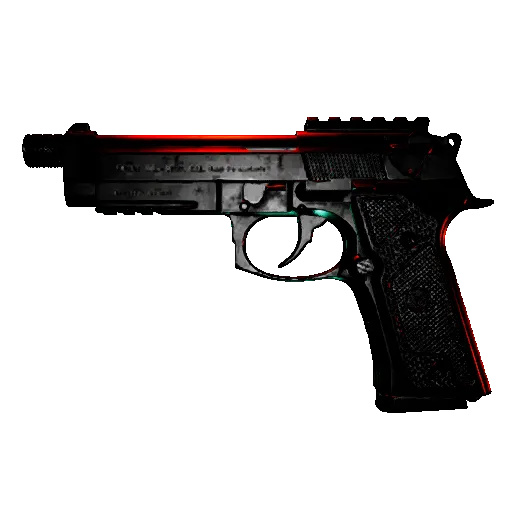
Start with the ammunition relationship
For a first Normal Objective run, do not start with a tier list. Start with the ammunition already in your Inventory. Keep one firearm when a current ammunition record points back to it. If no carried ammunition supports the firearm, treat its loaded rounds as finite and keep a current Melee weapon as the repeatable alternative.
The default has five parts:
- Match the firearm to one of the eight current ammunition families.
- Keep one supported firearm, not every firearm that uses the same family.
- Preserve a Melee fallback while the firearm has no reload supply.
- Reserve room for Medical when the current health state has no answer.
- Swap only when the new option fixes ammunition support, capacity, noise, or the damage field you need.
This order prevents the most common failure: carrying a firearm name without carrying the relationship that lets it keep working. Open the Firearms Inventory view for each weapon’s exact ammunition field. The Ammunition view shows the relationship in the other direction.
Use the Normal supply boundary
Normal does not guarantee a full found firearm. Its found-firearm range is 66% to 100% of that firearm’s capacity. Loose ammunition uses 100% of the base box amount on Normal, but the box still belongs to one ammunition family.
What Normal changes about the ammunition check
- Found firearm load
- 66% to 100% of that firearm's capacity
- Loose ammunition amount
- 100% of the base box amount
- Base Inventory capacity
- 10 kg before capacity skills or a Satchel
9mm pickup profiles
| Profile | Rounds | Compatible example |
|---|---|---|
| Small | 3 to 5 rounds | M9A3 or MP5A4 |
| Medium | 5 to 10 rounds | M9A3 or MP5A4 |
| Large | 10 to 15 rounds | M9A3 or MP5A4 |
| Loadout | 20 rounds | M9A3 or MP5A4 |
The first check after a pickup is therefore compatibility, not the number printed by another caliber. A Small 9mm pickup contains 3 to 5 rounds. Medium contains 5 to 10, Large contains 10 to 15, and the Loadout profile is fixed at 20. Those numbers do not make 9mm compatible with a firearm that uses another family.
Default: keep the firearm only when its current loaded rounds or a carried matching box give it a job now. The condition is visible support, not hope that the next room supplies it. The cost is leaving a weapon that could become useful later. The alternative is to carry it only while capacity remains open, then drop it first when that space is needed.
Choose one answer for the current resource state
Use the resource-state links below instead of reading every recommendation as though it applies at once. Each state has one default, its cost, and the signal for the next swap.
Choose the resource state you have now
Compatible ammunition present
Default: Keep one firearm that uses the ammunition you already have. M9A3 and MP5A4 both use 9mm, so carrying both does not add another ammunition family.
Cost: A second firearm still consumes capacity. Keep it only when its different magazine and hit-zone fields justify that weight.
Next swap: Swap when another firearm matches a larger ammunition reserve or solves a field the current one cannot.
Compatible ammunition absent
Default: Keep a current Melee weapon as the repeatable attack option. A loaded firearm is a finite option, not a supported loadout.
Cost: Melee attacks use stamina and give up firearm space. The firearm costs capacity after its loaded rounds are gone.
Next swap: Move to the firearm when its matching ammunition appears. Drop the empty unsupported firearm first if capacity closes.
Capacity full
Default: Remove the unsupported weapon first. If every weapon is supported, remove the extra attack whose job is already covered and keep the matching ammunition and needed recovery.
Cost: Losing a separate attack profile can reduce your answer to a later contact. The alternative is leaving the new pickup when that profile matters more.
Next swap: Make one change, check the remaining capacity, and stop when the retained attack and recovery are still supported.
Recovery absent
Default: Reserve the next open capacity for a Medical record whose treatment field matches the current health need. Do not fill it with a duplicate firearm.
Cost: You may give up a second damage profile. The alternative is accepting that the current Inventory has no answer to the health state.
Next swap: Reconsider the reserve after the health need is solved or another teammate covers the missing treatment.
The recovery state is separate from weapon quality. Bandages, Medkit, Phalanx Pills, and Experimental Gene Therapy do not have interchangeable treatment fields. If a current health or infection problem has no answer, a duplicate weapon is not a substitute for the matching Medical record.
Make the full Inventory cut
The base Inventory capacity is 10 kg before capacity skills or a Satchel. Read the held weapon’s own weight, then leave room for matching ammunition, Medical, Melee, or mission items that still have a job.
At full capacity, remove in this order:
- A firearm with no compatible ammunition after its loaded rounds are gone.
- Ammunition that supports none of the firearms you decided to keep.
- A duplicate firearm that does not solve a different current field.
- The optional fallback whose failure you can accept.
Do not drop the only matching ammunition and then call its firearm supported. Do not drop the only needed recovery item to carry an extra firearm. Remove one entry, recalculate the remaining capacity, and stop when the retained attack and recovery are still supported.
The cost of removing an extra weapon is losing a separate attack profile. The alternative is leaving the new pickup when that profile solves a more urgent problem. Use the Inventory capacity mechanism to check the 10 kg limit, Satchel self-weight, skill effects, and a fixed removal case before deciding.
Pay the noise cost on purpose
A firearm also produces a hearing stimulus. The standard gunshot value has a 45 m radius. The silenced value has a 10 m radius, which is 77.78% smaller. A Small Suppressor fits the M9A3, while a Large Suppressor fits the MP5A4.
Use the noise and hearing mechanism when you need the standard or Power Plant movement bases, Quiet Steps and Ranger Boots composition, or a non-gunfire stimulus field.
The suppressor noise boundary
- Generic Gunshot
- 45 m hearing stimulus radius
- Silenced Gunshot
- 10 m hearing stimulus radius
- Radius change
- 77.78% smaller
- M9A3
- Accepts the Small Suppressor
- MP5A4
- Accepts the Large Suppressor
Default: use the Melee fallback for an avoidable contact when ammunition is scarce and the gunshot radius is the unacceptable cost. Use the matching firearm when it protects the route, a teammate, or the objective and the ammunition cost is acceptable. With a compatible suppressor fitted, use the 10 m stimulus boundary instead of assuming the shot is silent.
The cost of Melee is stamina and closer contact. The cost of the firearm is ammunition plus its sound radius. The alternative is to move around the contact. Noise radius is not a guaranteed aggro circle, spawn rule, or proof that every zombie inside it reacts.
Use range as a field, not a promise
The Inventory field is the maximum distance represented by the firearm’s falloff curve. It is not a recommended firing distance and it does not guarantee a hit. The M9A3 record reaches 50.38 m on that curve; the MP5A4 reaches 45 m.
Use the field to reject a bad assumption, not to predict aim. If the target is farther into the curve, open how weapon combat damage works and check the hit zone and distance together. The default is to stay with the supported weapon when its current result still solves the lane. Closing distance costs space. Changing weapons costs capacity and may break ammunition support.
Know the failure signal and next swap
The current weapon choice has failed when one of these becomes true:
- The firearm is empty and no carried ammunition record supports it.
- Keeping the firearm prevents the Medical record needed for the current health state.
- The selected weapon’s curve and hit-zone result no longer solve the contact you must take.
- Its standard gunshot radius is the wrong cost for an avoidable contact.
- The weapon separates you from the squad because you keep searching for its support.
Use one swap rule for each failure. Empty and mismatched means move to Melee or a firearm matched to the ammunition already held. Full capacity means drop the mismatched or duplicate option. Missing recovery means reserve space for the treatment field. Unacceptable noise means Melee, a compatible suppressor, or no contact. A bad damage result means check the combat calculation before changing the whole Inventory.
Do not change two variables at once after a failed run. If compatibility failed, keep the same carry size and change the ammunition relationship. If capacity failed, keep the supported relationship and remove the duplicate. If the sound cost failed, change the attack method or suppressor state. That makes the next result explainable.
Know what this choice does not answer
This guide answers the carry decision for current Firearms, Ammunition, Melee, Medical, capacity, noise, and the next swap. It does not rank every firearm for every target, predict loot order, prove aim or hit registration, resolve armor, or choose a route through a specific map.
Difficulty damage scaling, attachment effects, stamina, Medical treatment, and infection remain separate mechanics. This page uses the Normal ammunition boundary and current Inventory fields. Open which attachments fit and what they change when a mount, optic field, or suppressor boundary becomes the deciding condition.
These records and decisions are current for Hotfix 1.0.4.0. The page was checked on September 2, 2026.