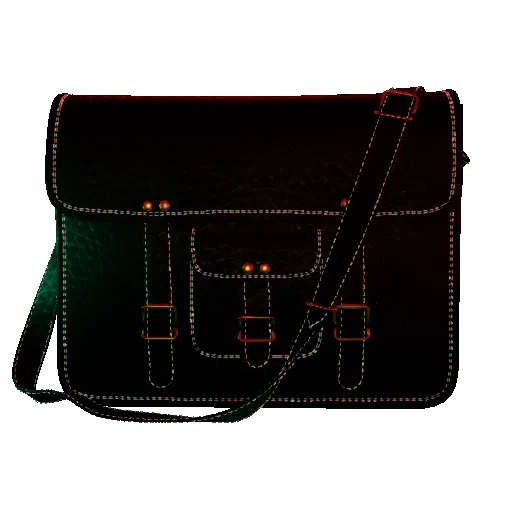
What is the default capacity?
Every Responder starts with 10 kg of Inventory capacity. Treat that as a weight limit, not a count of visible rows. One heavy weapon can use more space than several light medical entries.
The default carry rule is simple: keep one supported attack and one recovery option, then judge the next pickup by the room that remains. This holds when the attack still has the resource it needs and the recovery item addresses a real failure state. The cost is leaving useful but unsupported gear behind. If the route makes a different problem urgent, swap the least useful item instead of protecting a fixed loadout.
Use this order:
- Start with the 10 kg base limit.
- Keep at most one tier from each capacity-skill family, then add the effects from every active family.
- Apply if it is held.
- Add the Satchel’s own weight and every other carried entry.
- Subtract carried weight from capacity before judging the pickup.
A pickup fits only when its full entry weight is no greater than the remaining capacity. A positive amount of room is not enough by itself. For example, 0.6 kg remaining cannot hold a 1 kg .
How do capacity skills change the limit?
lowers capacity by 2 kg, leaving 8 kg, while raising maximum health to 110% of its underlying value. Expert keeps the same 2 kg capacity loss and raises maximum health to 120%. Pick it for the health benefit only when the smaller pack will still hold the run’s essentials.
adds 2 kg, bringing the limit to 12 kg. Its cost is maximum stamina at 85% of the underlying value. Expert adds 3 kg for a 13 kg limit and leaves maximum stamina at 90%.
adds 1 kg, bringing the limit to 11 kg. Its cost is maximum health at 85% of the underlying value. Expert adds 2 kg for a 12 kg limit and leaves maximum health at 95%.
Take Caravan when carrying room is the immediate need and the run can absorb the stamina loss. Mule is the alternative when health, rather than stamina, is the affordable cost. Neither is free space. The skill can make another item fit while making sprinting or surviving contact less forgiving.
Open the stamina mechanism before using a 100-point base case with Caravan; its maximum-stamina tradeoff changes the starting budget.
Normal and Expert from the same family never add together. Expert replaces Normal, so Caravan Expert gives a 13 kg limit before the Satchel, not 15 kg. Different families do add: Caravan plus Mule gives 13 kg, while Deprived plus Caravan returns to 10 kg. With Deprived, Caravan, and Mule active, the additive result is 11 kg; the Satchel then raises it to 13.75 kg. The Responder skill mechanics guide covers the same tier-replacement and cross-family rule.
How much space does the Satchel really add?
The Satchel applies a 1.25x multiplier after the capacity skill is added:
capacity with Satchel = (10 kg + active Deprived + active Caravan + active Mule capacity effects) × 1.25
With no capacity skill, that produces 12.5 kg. The Satchel itself weighs 0.5 kg, so an otherwise empty pack has 12 kg available. Its net usable gain over the 10 kg base is 2 kg, not 2.5 kg.
Keep the Satchel by default when the pack needs more than the smaller limit. The condition is that the Satchel remains held. The cost is its 0.5 kg entry. Dropping it removes that entry but also removes the 1.25x limit, so the rest of the pack may become overweight at once.
The safe removal test is to recalculate against the limit without the Satchel. If every remaining item still fits, dropping it frees 0.5 kg. If the remaining pack exceeds the smaller limit, keep it and remove a different entry. The current tiers and three legal cross-family states are shown below.
Each capacity skill tier
No capacity skill
- Capacity
- 10 kg
- Other effect
- No skill effect
- With Satchel
- 12.5 kg
- Net Satchel gain
- +2 kg
Deprived
- Capacity
- 8 kg
- Other effect
- 110% maximum health
- With Satchel
- 10 kg
- Net Satchel gain
- +1.5 kg
Deprived - Expert
- Capacity
- 8 kg
- Other effect
- 120% maximum health
- With Satchel
- 10 kg
- Net Satchel gain
- +1.5 kg
Caravan
- Capacity
- 12 kg
- Other effect
- 85% maximum stamina
- With Satchel
- 15 kg
- Net Satchel gain
- +2.5 kg
Caravan - Expert
- Capacity
- 13 kg
- Other effect
- 90% maximum stamina
- With Satchel
- 16.25 kg
- Net Satchel gain
- +2.75 kg
Mule
- Capacity
- 11 kg
- Other effect
- 85% maximum health
- With Satchel
- 13.75 kg
- Net Satchel gain
- +2.25 kg
Mule - Expert
- Capacity
- 12 kg
- Other effect
- 95% maximum health
- With Satchel
- 15 kg
- Net Satchel gain
- +2.5 kg
Legal cross-family skill states
One tier from each family may be active together. Normal and Expert from the same family never stack.
Deprived + Caravan
- Capacity
- 10 kg
- With Satchel
- 12.5 kg
- Net Satchel gain
- +2 kg
Caravan + Mule
- Capacity
- 13 kg
- With Satchel
- 16.25 kg
- Net Satchel gain
- +2.75 kg
Deprived + Caravan + Mule
- Capacity
- 11 kg
- With Satchel
- 13.75 kg
- Net Satchel gain
- +2.25 kg
How is each entry weighed?
The game weighs an inventory entry in a fixed order. It applies the matching item-weight skill to one unit, truncates that unit to the game’s smallest stored weight unit, multiplies by quantity, and then enforces the entry’s minimum weight. Quantity matters, so two Bandages are one calculation with two units, not a guess based on the number of card rows.
changes only Bandages, Medkits, and Phalanx Pills to 80% of their base weight. Expert replaces it and uses 70%. One Bandages entry moves from 0.35 kg to 0.28 kg or 0.245 kg. One Medkit moves from 1 kg to 0.8 kg or 0.7 kg.
The skill name does not make every recovery item lighter. stays at 1 kg, and a stays at 0.35 kg. Apply the reduction only to the three named medical entries.
Weight does not answer how much health an item restores. Use the Bandages and Medkit healing rule for Skilled Medic, the maximum-health cap, and a held-item shortfall.
Medical entry weight by skill tier
Bandages
- No skill
- 0.35 kg
- Healing Item Stack
- 0.28 kg
- Expert
- 0.245 kg
Medkit
- No skill
- 1 kg
- Healing Item Stack
- 0.8 kg
- Expert
- 0.7 kg
Phalanx Pills
- No skill
- 0.35 kg
- Healing Item Stack
- 0.28 kg
- Expert
- 0.245 kg
Does a fixed pack have room for a Cleaver?
The fixed case in the cards starts at 9.4 kg: one , one , one , one Experimental Gene Therapy, one Medkit, two Bandages, one Phalanx Pills, and one Battery. The target pickup is a 1 kg Cleaver.
With the 10 kg base limit, 0.6 kg remains. The Cleaver is 0.4 kg too heavy. With a Satchel, the pack weighs 9.9 kg because the bag adds 0.5 kg, but the 12.5 kg limit leaves 2.6 kg before the pickup. The Cleaver fits and leaves 1.6 kg.
Healing Item Stack Expert gives a third result without changing the 10 kg limit. The affected medical entries fall enough for the existing pack to weigh 8.785 kg. The Cleaver fits and leaves 0.215 kg. This answer fails if the skill is not active or the pack contains different quantities.
Deprived with a Satchel gives another boundary. The bag raises the reduced 8 kg limit to 10 kg and makes the carried pack weigh 9.9 kg. Only 0.1 kg remains, so the Cleaver is 0.9 kg too heavy.
One fixed pack, one pickup
Does the Cleaver fit?
The pack holds 1 Sledgehammer, 1 MP5A4, 1 Experimental Gene Therapy, 1 M9A3, 1 Medkit, 2 Bandages, 1 Flashlight Batteries, 1 Phalanx Pills. Each result below uses those exact entries and adds one Cleaver.
Base Inventory
- Capacity
- 10 kg
- Carried now
- 9.4 kg
- Room before pickup
- 0.6 kg
- After 1 kg Cleaver
- Does not fit
The Cleaver is 0.4 kg too heavy. Use the ammunition-support states below to decide which weapon leaves, or leave the pickup when both current weapons have separate jobs.
Base Inventory with Satchel
- Capacity
- 12.5 kg
- Carried now
- 9.9 kg
- Room before pickup
- 2.6 kg
- After 1 kg Cleaver
- 1.6 kg
The Cleaver fits, leaving 1.6 kg. Keep the Satchel unless losing its capacity still leaves every required item inside the smaller limit.
Healing Item Stack Expert
- Capacity
- 10 kg
- Carried now
- 8.785 kg
- Room before pickup
- 1.215 kg
- After 1 kg Cleaver
- 0.215 kg
The Cleaver fits, leaving 0.215 kg. This only holds while the three affected medical entries stay at Expert weight.
Deprived with Satchel
- Capacity
- 10 kg
- Carried now
- 9.9 kg
- Room before pickup
- 0.1 kg
- After 1 kg Cleaver
- Does not fit
The Cleaver is 0.9 kg too heavy. The Satchel does not erase Deprived’s 2 kg capacity loss for this pack, so use the same weapon-support rule before taking it.
What leaves in the base case?
Ammunition support is checked separately from weight. Use the one state that matches the two firearms now.
MP5A4 supported; M9A3 duplicates its job
Drop the M9A3, then take the Cleaver.
- Final carried weight
- 9.4 kg
- Room afterward
- 0.6 kg
MP5A4 lacks compatible ammunition; M9A3 is supported
Drop the unsupported MP5A4, then take the Cleaver.
- Final carried weight
- 8.4 kg
- Room afterward
- 1.6 kg
Both firearms are supported and serve separate jobs
Leave the Cleaver and keep the current pack.
- Final carried weight
- 9.4 kg
- Room afterward
- 0.6 kg
These are fixed rule cases, not saved loadouts. Nothing on this page changes the entries or produces a shareable set. Use the arithmetic to understand the boundary, then check the current item fields in Inventory.
What should you remove when the pickup does not fit?
In the base case, removing one 1 kg entry is enough to cover the 0.4 kg shortfall. That does not make every 1 kg item an equally good choice.
Keep Gene Therapy when infection treatment is not covered elsewhere. Keep the Medkit when it is the only health recovery. Then match the current firearms to one of these states:
- If the MP5A4 has compatible ammunition and the M9A3 only duplicates its job, drop the 1 kg M9A3 and take the Cleaver. The pack returns to 9.4 kg, leaving 0.6 kg.
- If the MP5A4 lacks compatible ammunition and the M9A3 is supported, drop the unsupported 2 kg MP5A4 and take the Cleaver. The pack falls to 8.4 kg, leaving 1.6 kg.
- If both firearms are supported and cover separate jobs, leave the Cleaver. The current pack stays at 9.4 kg with 0.6 kg free.
The first choice costs the handgun’s separate attack and ammunition option. The second gives up the MP5A4, but it removes a weapon that cannot currently fire. The third keeps both working firearm roles at the cost of the new melee option. Never discard a unique cure merely because its weight happens to solve the arithmetic.
The choice has failed when the retained attack has no compatible ammunition, the pack has no usable recovery, or the new total still exceeds capacity. Recover by undoing the pickup, restoring the last workable item set, and checking the current route’s most likely failure before making another swap. The weapon and ammunition decision covers the support check in one click.
What does this rule not cover?
This mechanism covers the current base limit, Deprived, Caravan and Mule tier composition, Satchel composition and self-weight, supported item weights, quantity, minimum entry weight, the Healing Item Stack tiers, pickup fit, overage, and sufficient single-entry removals.
Ammunition is outside the weighted-item calculation. The game gives box amounts and firearm compatibility but no universal conversion from those boxes to an entry weight. Do not assign ammunition a made-up kilogram value.
The rule also does not prove that an item will appear on a route, that a team member can spare it, or that the lightest sufficient removal is strategically correct. Those decisions require the current attack, recovery, objective, and team state.
Open Inventory for the exact item record and Skills for the active capacity tiers. If the pack is already full, return to the fixed sequence: protect one supported attack and one recovery option, check the next item’s full weight, and remove only what the remaining plan can afford to lose. These facts apply to Hotfix 1.0.4.0 and were checked on September 2, 2026.