Check the mount before the effect
Start with fit. An attachment has a slot type and a mount size, while each firearm exposes its own set of accepted attachment tags. A matching label is the condition that lets the rest of the decision matter. The attachment’s description, the firearm’s broad category, and a familiar-looking model are not substitutes for that relationship.
The default is to open the attachment control on the equipped firearm and check the exact current record. If the attachment fits, move on to its effect fields. If it does not fit, leave it. The cost is giving up an item that may work on a later firearm. The alternative is to change firearms, but that makes sense only when the new firearm also works with the ammunition, carried weight, and combat result you need.
Do not plan a firearm swap around an attachment alone. A compatible muzzle or sight does not make unsupported ammunition usable, and it does not erase Inventory weight. Open the Attachments Inventory view for the record you found. Then use the related firearm links in that record instead of guessing from its name.
Check the slot and mount before reading an effect
The current set has 8 attachments and 15 firearms. Compatibility comes from an exact slot tag, not from the weapon category or the attachment name.
In-game instruction: Hold Inspect Item to bring up Weapon Attachments. Weapon attachments can be attached to several areas of guns including: Muzzle, Rails, and Sights. Not every gun is compatible with weapon attachments, so make sure you explore to find the best options.
| Attachment | Fit | Compatible firearms | Available in |
|---|---|---|---|
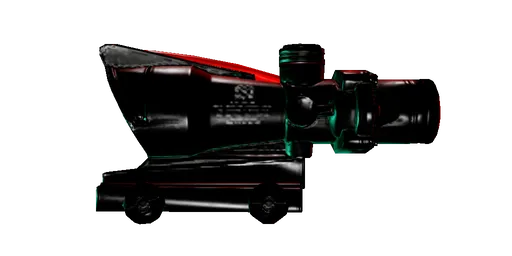 Combat Optic Gunsight Combat Optic Gunsight | Medium Sight | 9 current: 590A1, Gruber 922, Gruber Ranch, Hunter 85, M7A1, MC-15, MP5A4, Rochester 1873, X12 Super | Objective and Survival |
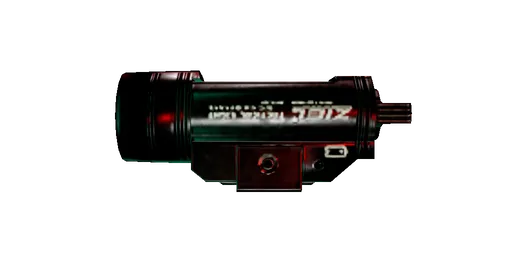 Handgun Flashlight Handgun Flashlight | Small Rail | 3 current: Gruber MkVII, M1911A1, M9A3 | Survival |
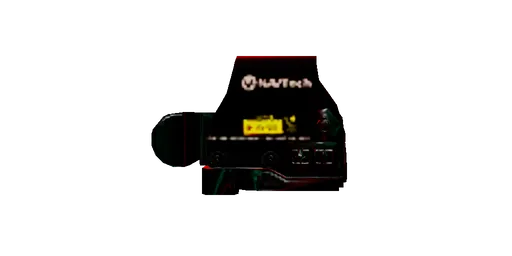 Holographic Optic Holographic Optic | Medium Sight | 9 current: 590A1, Gruber 922, Gruber Ranch, Hunter 85, M7A1, MC-15, MP5A4, Rochester 1873, X12 Super | Objective and Survival |
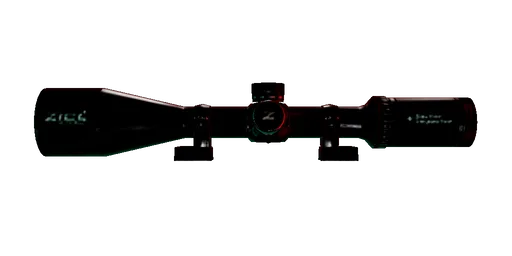 Hunting Scope Hunting Scope | Large Sight | 6 current: Gruber 922, Gruber Ranch, Hunter 85, M7A1, MC-15, Rochester 1873 | Objective and Survival |
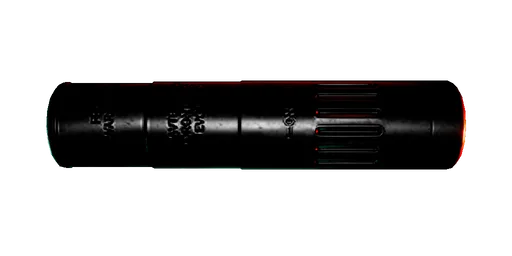 Large Suppressor Large Suppressor | Large Muzzle | 8 current: Gruber 922, Gruber Ranch, Hunter 85, M14 Battle Rifle, M7A1, MC-15, MP5A4, Rochester 1873 | Objective and Survival |
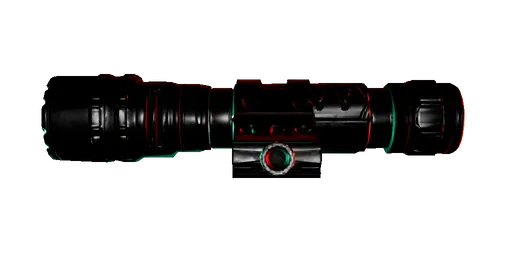 Long Gun Flashlight Long Gun Flashlight | Large Rail | 7 current: 590A1, Gruber 922, Gruber Ranch, M7A1, MC-15, Rochester 1873, X12 Super | Objective and Survival |
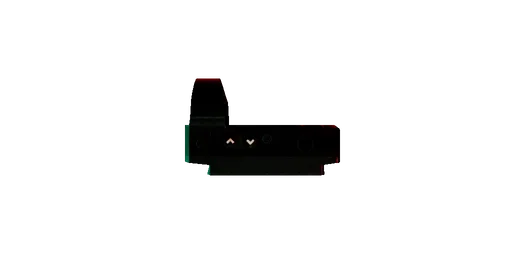 Micro Reflex Sight Micro Reflex Sight | Small Sight | 3 current: Gruber MkVII, M1911A1, M9A3 | Objective and Survival |
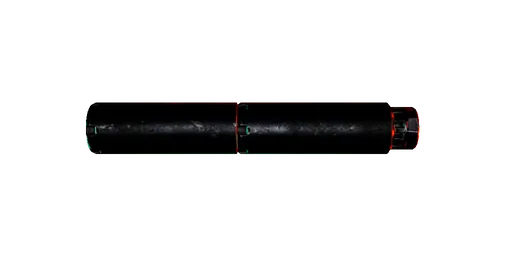 Small Suppressor Small Suppressor | Small Muzzle | 3 current: Gruber MkVII, M1911A1, M9A3 | Objective and Survival |
Hard stop: Fierra DB12 and Model 13 have no attachment slots, so none of the eight current attachments fits either firearm.
Find the current compatible firearms
The fit table covers the complete current attachment set and every current firearm considered by this rule. Read one row at a time. The fit column joins mount size and slot type. The compatible-firearms column is the authoritative answer for that attachment. Availability tells you whether the item belongs to Objective, Survival, or both current collections.
The hard failure case matters as much as a successful fit. Fierra DB12 and Model 13 have no attachment slots. An attachment therefore cannot apply its effects to either firearm. Do not carry a sight or suppressor for one of those two weapons on the assumption that the broad weapon family is enough.
For every other firearm, the default is still record-first. Search the Firearms Inventory view, open the firearm, and read its compatible attachments. This gives the same relationship from the other direction. If the expected attachment is missing, the condition failed. Keep the firearm for its existing fields, or change it for a complete weapon reason rather than trying to force the attachment choice.
Read an attachment multiplier
Each listed effect multiplies one base field. Read the operation literally. A value below the base lowers the named field. A value above the base raises it. A value equal to the base leaves it unchanged. Whether lower or higher helps depends on the field. Lower spread and recoil values are generally favorable, while a lower spread recovery rate means recovery is slower.
That distinction is why the full list matters. The raises its range field but lowers its spread recovery rate. Treating every lower number as an improvement would reverse the recovery trade. The and also include an unchanged range multiplier among their recoil and spread fields. A suppressor record therefore does not support a claim that effective range increases or decreases.
Use the complete modifier list below when a field decides the next action. It contains every listed modifier for the current attachment set. If a field is absent from one attachment’s list, do not assume that the attachment changes it.
All 47 current attachment modifiers
Every entry is a multiplier. A result below 100% lowers that field, a result above 100% raises it, and 100% leaves it unchanged.
Combat Optic Gunsight6 modifiers
| Field | Operation | Result |
|---|---|---|
| Initial ADS spread | Multiply by 0.25 | 25% of base, 75% lower |
| Iron-sight recoil strength | Multiply by 0.75 | 75% of base, 25% lower |
| Moving spread | Multiply by 0.9 | 90% of base, 10% lower |
| Spread added per shot | Multiply by 0.6 | 60% of base, 40% lower |
| Spread recovery rate | Multiply by 1.25 | 125% of base, 25% higher |
| Targeting spread | Multiply by 0.5 | 50% of base, 50% lower |
Handgun Flashlight3 modifiers
| Field | Operation | Result |
|---|---|---|
| Initial ADS spread | Multiply by 0.95 | 95% of base, 5% lower |
| Maximum spread | Multiply by 0.95 | 95% of base, 5% lower |
| Spread direction angle | Multiply by 0.95 | 95% of base, 5% lower |
Holographic Optic5 modifiers
| Field | Operation | Result |
|---|---|---|
| Initial ADS spread | Multiply by 0.5 | 50% of base, 50% lower |
| Moving spread | Multiply by 0.7 | 70% of base, 30% lower |
| Spread added per shot | Multiply by 0.8 | 80% of base, 20% lower |
| Spread recovery rate | Multiply by 1.5 | 150% of base, 50% higher |
| Targeting spread | Multiply by 0.7 | 70% of base, 30% lower |
Hunting Scope5 modifiers
| Field | Operation | Result |
|---|---|---|
| Initial ADS spread | Multiply by 0.1 | 10% of base, 90% lower |
| Iron-sight recoil strength | Multiply by 0.75 | 75% of base, 25% lower |
| Effective range | Multiply by 1.2 | 120% of base, 20% higher |
| Spread recovery rate | Multiply by 0.8 | 80% of base, 20% lower |
| Targeting spread | Multiply by 0.5 | 50% of base, 50% lower |
Large Suppressor10 modifiers
| Field | Operation | Result |
|---|---|---|
| Initial ADS spread | Multiply by 0.9 | 90% of base, 10% lower |
| Maximum spread | Multiply by 0.9 | 90% of base, 10% lower |
| Effective range | Multiply by 1 | 100% of base, unchanged |
| Maximum horizontal recoil limit | Multiply by 0.5 | 50% of base, 50% lower |
| Minimum horizontal recoil limit | Multiply by 0.5 | 50% of base, 50% lower |
| Vertical recoil | Multiply by 0.8 | 80% of base, 20% lower |
| First-shot vertical recoil | Multiply by 0.8 | 80% of base, 20% lower |
| Maximum horizontal recoil | Multiply by 0.5 | 50% of base, 50% lower |
| Minimum horizontal recoil | Multiply by 0.5 | 50% of base, 50% lower |
| Spread direction angle | Multiply by 0.9 | 90% of base, 10% lower |
Long Gun Flashlight3 modifiers
| Field | Operation | Result |
|---|---|---|
| Initial ADS spread | Multiply by 0.95 | 95% of base, 5% lower |
| Maximum spread | Multiply by 0.95 | 95% of base, 5% lower |
| Spread direction angle | Multiply by 0.95 | 95% of base, 5% lower |
Micro Reflex Sight5 modifiers
| Field | Operation | Result |
|---|---|---|
| Initial ADS spread | Multiply by 0.5 | 50% of base, 50% lower |
| Moving spread | Multiply by 0.7 | 70% of base, 30% lower |
| Spread added per shot | Multiply by 0.8 | 80% of base, 20% lower |
| Spread recovery rate | Multiply by 1.5 | 150% of base, 50% higher |
| Targeting spread | Multiply by 0.7 | 70% of base, 30% lower |
Small Suppressor10 modifiers
| Field | Operation | Result |
|---|---|---|
| Initial ADS spread | Multiply by 0.9 | 90% of base, 10% lower |
| Maximum spread | Multiply by 0.9 | 90% of base, 10% lower |
| Effective range | Multiply by 1 | 100% of base, unchanged |
| Maximum horizontal recoil limit | Multiply by 0.5 | 50% of base, 50% lower |
| Minimum horizontal recoil limit | Multiply by 0.5 | 50% of base, 50% lower |
| Vertical recoil | Multiply by 0.8 | 80% of base, 20% lower |
| First-shot vertical recoil | Multiply by 0.8 | 80% of base, 20% lower |
| Maximum horizontal recoil | Multiply by 0.5 | 50% of base, 50% lower |
| Minimum horizontal recoil | Multiply by 0.5 | 50% of base, 50% lower |
| Spread direction angle | Multiply by 0.9 | 90% of base, 10% lower |
Choose for the current problem
After fit, choose one problem. For a medium sight, the is the default when the steadier opening, targeting, and per-shot fields matter more than moving spread and faster recovery. The is the alternative when its moving-spread and recovery fields solve the lane. The cost is its weaker result in the fields where the Combat Optic has the advantage.
For a compatible large sight mount, use the only when its range result is worth its slower spread recovery. This is a condition, not a general ranking. The cost appears every time the recovery field matters after a shot. A medium optic is the alternative on the same current firearms when spread behavior is the immediate problem.
For a muzzle choice, use a compatible suppressor when the gunshot radius is the failure cost. The condition is exact Small or Large fit. The cost remains ammunition, firearm weight, and the parts of an encounter that attachment values cannot predict. Melee or avoiding the contact is the alternative when the firearm has no matching suppressor or when firing is unnecessary.
The Handgun Flashlight and Long Gun Flashlight follow the same fit-first rule. Their listed effects change three spread fields. Their descriptions identify their mounted-light role, but the current values do not calculate visibility or room brightness. Choose one for a compatible mount when its listed fields answer the need you can verify. Do not invent a numerical visibility benefit.
Use the first condition that matches the firearm
Default check
Match the exact mount
Choose: keep the attachment only when the firearm appears in its compatible list.
Why: a modifier has no applicable firearm relationship until the mount matches.
Cost: leaving it gives up a possible later fit. Alternative: change firearms only when the new firearm's ammunition and carried weight still work for the run.
Medium sight
Combat Optic Gunsight for the steadier opening
Choose: use it when initial ADS spread at 25% of base, targeting spread at 50%, and per-shot spread at 60% solve the lane.
Cost: moving spread stays at 90% and recovery at 125%.
Alternative: Holographic Optic uses 70% moving spread and 150% recovery, but its initial, targeting, and per-shot results are 50%, 70%, and 80% of base.
Large sight
Hunting Scope only when the range field pays for slower recovery
Choose: on its 6 compatible firearms, it raises effective range to 120% of base.
Cost: spread recovery becomes 80% of base, which is 20% slower.
Alternative: all 6 of those firearms also expose a medium sight mount. Use Combat Optic Gunsight or Holographic Optic when the medium optic's spread fields matter more than the range multiplier.
Muzzle
A compatible suppressor when the shot radius is the failure cost
Choose: Small Suppressor fits 3 current handguns. Large Suppressor fits 8 current long guns.
Why: the gunshot stimulus boundary changes from 45 m to 10 m. Effective range remains 100% of base.
Cost: the firearm still costs ammunition and its carried weight. Alternative: take the contact with Melee or walk around it when no compatible suppressor fits.
Use the suppressor sound boundary
A suppressor changes the gunshot stimulus from the standard value to the silenced value. It does not make a shot silent. Use the smaller radius when a compatible suppressor is fitted, and keep the broader standard value when it is not.
The noise and hearing mechanism places both gunshot fields beside movement, distraction, alarm, and zombie-call records. Use it when the action itself, rather than attachment fit, is the question.
The default is to take an avoidable contact with Melee or walk around it when the standard shot radius is too expensive. Fire when the shot protects the route, the objective, or another player and the ammunition and sound costs are acceptable. A compatible suppressor is the third answer. It narrows the stimulus boundary, but it does not prove which zombies react, what route they take, or whether another sound becomes more important.
A suppressor changes the gunshot radius
- Standard gunshot
- 45 m radius
- Silenced gunshot
- 10 m radius
- Radius reduction
- 77.78% smaller
- Small Suppressor fit
- Gruber MkVII, M1911A1, M9A3
- Large Suppressor fit
- Gruber 922, Gruber Ranch, Hunter 85, M14 Battle Rifle, M7A1, MC-15, MP5A4, Rochester 1873
This is a stimulus radius, not a promise about every zombie inside it. The attachment values do not turn it into an aggro circle, a spawn rule, or silence.
Open the direct or record when you need the exact compatible firearm list. If the attachment does not appear in the firearm’s relationships, use the standard boundary and choose another attack method. Do not transfer the silenced result from one compatible firearm to an incompatible one.
Know when the attachment choice has failed
The choice has failed when the mount does not match, the changed field does not solve the current lane, or the cost in another field is worse than the benefit. Respond to the failed condition directly.
If fit failed, leave the attachment or use a firearm that already works with your ammunition and weight budget. If an optic’s spread trade failed, switch to the compatible optic whose listed fields answer the actual problem. If the Hunting Scope’s recovery cost failed, use a compatible medium optic instead. If the sound cost failed, confirm suppressor fit, use Melee, or avoid the contact. If the whole firearm package failed, return to the weapon and ammunition carry decision rather than changing attachments repeatedly.
Change one condition at a time after a bad result. This keeps the next decision explainable. A new firearm can change ammunition, magazine, weight, damage, range, and attachment compatibility together. An attachment change is narrower, so use it only when its listed fields address the failure you observed.
Know what the rules do not prove
Use this guide for current attachments, exact mount compatibility, effect multipliers, collection availability, and the standard versus silenced gunshot boundary. The weapon combat mechanism covers damage curves, registered shotgun pellets, ordered melee contacts, and stamina. Use the Inventory query for complete current firearm and attachment details.
The attachment rule does not predict aim, hit registration, lighting visibility, zombie reaction, loot order, simultaneous attachment stacking, or the number of items that can occupy a physical area at once. An effect list also does not prove that an unlisted field changes. Keep those unknowns outside the recommendation instead of filling them with a familiar rule from another game or patch.
These records and decisions are current for Hotfix 1.0.4.0. The page was checked on September 2, 2026.